VERONIKA DURIN-HORNYIK
As early as 1945, Jerzy Giedroyc planned to establish a university for young Poles in liberated Europe, in response to Poland’s passage under Soviet influence. This project mattered to him as much as the creation of a publishing house and a political and literary journal. With the onset of East–West tensions, the idea quickly evolved into an academic institution intended for all the “young escapees from the East” fleeing the establishment of communism in Central and Eastern Europe. It was presented by Józef Czapski, in the presence of Giedroyc and at the invitation of the American intellectual James Burnham, during the first meeting of a large cultural event known as the Congress for Cultural Freedom (CCF), held in West Berlin in June 1950. One year later, the university was officially created as the Free Europe University in Exile in New York and established in Strasbourg as the Collège de l’Europe libre (Kolegium Wolnej Europy), both under the auspices of the American organisation, the National Committee for a Free Europe (NCFE).
Giedroyc and Czapski wished to create “a dynamic center, truly anti‑Soviet and not merely cultural,” open both to Russian‑speaking refugees and to those crossing the Iron Curtain. Yet the College — which welcomed around a thousand refugee students during its existence — did not meet their expectations. At the request of the French authorities, only refugees already settled in the West could be admitted, and the two Polish initiators were soon pushed aside by the NCFE, much to Burnham’s regret. In 1958, the College suddenly closed its doors and subsequently fell into oblivion.
Apart from a few articles published in Kultura and some press clippings from the 1950s, the Collège de l’Europe libre remained largely unknown until the 2000s, when the first scholarly research began. Early studies focused on Kultura’s involvement in the CCF through Burnham, a staunch supporter of the university project and a long‑standing friend of the Literary Institute. However, the long invisibility of the College can be partly explained by the secrecy surrounding the activities of the NCFE — notably Radio Free Europe (Radio Wolna Europa) — an anti‑communist organization engaged in the Cold War with the aim of undermining communist regimes behind the Iron Curtain and unofficially linked to the Central Intelligence Agency (CIA).
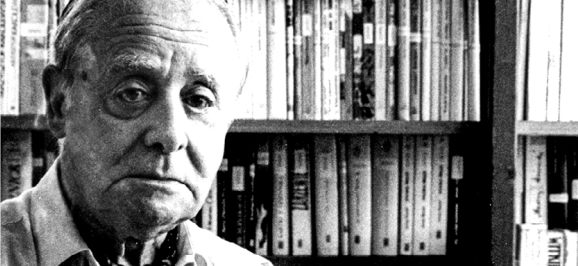
The opening of American archives in the early 2000s, complemented by the Kultura collections, made it possible to reconstruct the history of the Collège de l’Europe libre and to assess the importance this project initially held for Giedroyc. It was the only NCFE initiative that did not appear in its original 1949 political program. One may therefore assert that without Giedroyc, the Collège de l’Europe libre would probably never have come into being. An archival video recorded with Giedroyc at the end of his life clearly shows the regret he felt regarding this project that had meant so much to him:
https://kulturaparyska.com/pl/collection/media/show/kongres-wolnosci-kultury
Veronika Durin-Hornyik
Bibliography (English, French, Polish)
Durin-Hornyik, Veronika. “Kultura and Its Forgotten University in Exile.” The Exile History Review 2 (2023): 165–187. https://doi.org/10.31743/ehr.16815
Durin-Hornyik, Veronika. “Kultura séduit l’élite américaine (1948–1958).” In Penser la démocratie et agir en exil: Les leçons de Jerzy Giedroyc et de Kultura, 1947–2000, edited by Anna Bernhardt, Anna Ciesielska-Ribard, and Iwona H. Pugacewicz, 305–336. Paris: Association Institut Littéraire Kultura / Centre de civilisation polonaise, Sorbonne Université, 2023. https://kulturaparyska.com/pl/library/show/106463
Durin-Hornyik, Veronika. “Le Collège de l’Europe libre et la préparation de la construction démocratique de l’Europe de l’Est, 1948–1958.” Relations internationales 180, no. 4 (2019): 13–25. https://shs.cairn.info/revue-relations-internationales-2019-4-page-13?lang=fr
Supruniuk, Mirosław A. “Les Polonais au Collège de l’Europe libre de Strasbourg.” In Les exilés polonais en France et la réorganisation pacifique de l’Europe (1940–1989), 215–236. Frankfurt am Main: Peter Lang, 2017.
Kowalczyk, Andrzej S. Wena do polityki. O Giedroyciu i Mieroszewskim. Warsaw: Więź, 2015.
Smith, Giles Scott. “The Free Europe University in Strasbourg: U.S. State–Private Networks and Academic ‘Rollback’.” Journal of Cold War Studies 16, no. 2 (2014): 77–107. https://doi.org/10.1162/JCWS_a_00452
Durin-Hornyik, Veronika. “The Free Europe University in Exile, Inc. and the Collège de l’Europe libre (1951–1958).” In The Inauguration of ‘Organized Political Warfare’: The Cold War Organizations Sponsored by the National Committee for a Free Europe / Free Europe Committee, edited by Katalin Kádár Lynn, 440–451. Saint Helena: Helena History Press, 2013.
Supruniuk, Mirosław A. Przyjaciele Wolności: Kongres Wolności Kultury i Polacy. Warsaw: DIG, 2008.
Grémion, Pierre. Intelligence de l’anticommunisme: Le Congrès pour la liberté de la culture à Paris (1950–1975). Paris: Fayard, 1995.